

If you’re planning a home extension in places like Lucan, Clontarf or Rathmines, chances are you’re doing it for one big reason — you want more space. And if we’re being honest, you also want more light.
No one spends serious money on an extension thinking, “I’d love this to feel smaller and darker than before.”
But here’s the thing… we’ve seen it happen. Not because people made silly decisions — but because small design choices add up. Ceiling heights, window placement, layout decisions, even garden orientation — they all matter more than most homeowners realise.
So in this post, I’m going to walk you through the most common extension design mistakes that actually reduce light and space — and what to do instead.
If you’re still at the planning stage, this could save you a lot of regret later.
1. Building Too Deep Without Thinking About Natural Light
This is probably the biggest one.
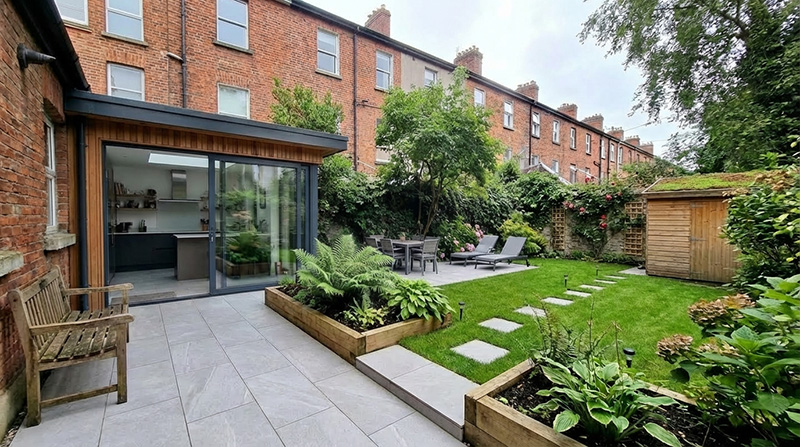
In areas like Lucan and Clontarf, many homes are semi-detached or terraced with decent rear gardens. The temptation is always the same: “Let’s go as far back as we can.”
And sometimes that works.
But if you extend too deep without thinking about how light travels through the house, you can end up with a lovely new kitchen… and a dark middle room behind it.
We see this especially in older Rathmines red-bricks where the original house already has smaller windows. Extend too far and suddenly the centre of the house feels gloomy.
What To Do Instead
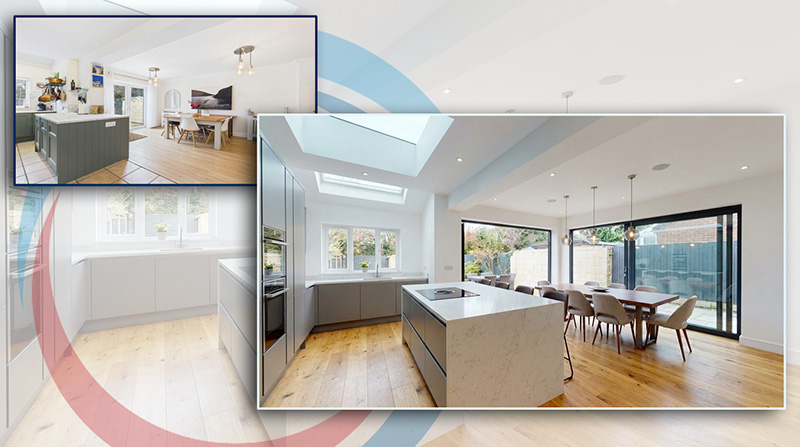
- Consider rooflights or roof lanterns.
- Think about glazing above eye level.
- Look at partial extensions rather than full-width, full-depth builds.
- Consider internal glazing or crittall-style partitions.
Light needs a pathway. If you block that pathway, the house feels heavier.
If you’re in early planning stages, our Home Extensions Dublin page explains how we approach layouts before drawings are finalised.
2. Ignoring Garden Orientation
This one surprises people.
Two identical houses in Clontarf can feel completely different simply because one faces south-west and the other faces north-east.
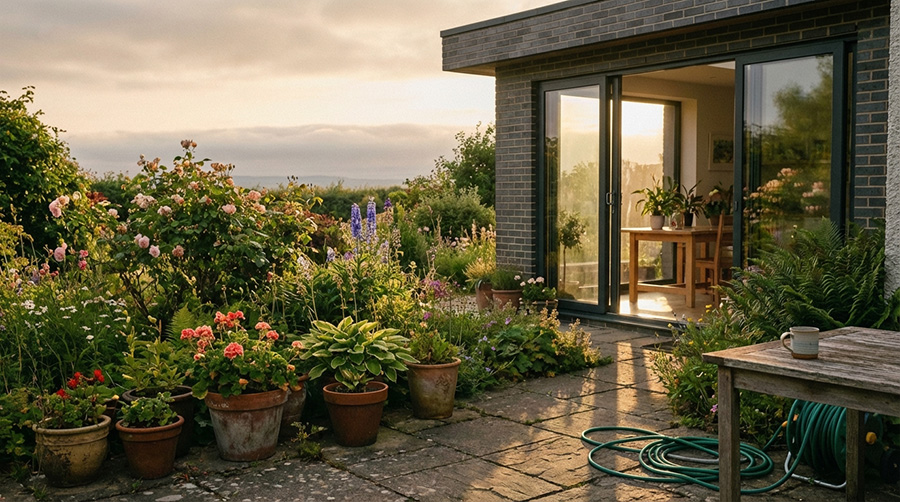
If your garden is north-facing and you extend outwards with a big flat roof and minimal glazing, you might unintentionally block what little light you had.
We’ve seen extensions in Lucan where homeowners assumed “bigger glass = brighter space” — but without factoring in orientation, it didn’t make much difference.
What To Do Instead
- Map how sunlight moves across your garden.
- Consider angled rooflights to catch southern light.
- Use light-coloured finishes internally.
- Think about glazing placement rather than just size.
Sometimes a well-positioned rooflight does more than a huge sliding door.
3. Low Ceiling Heights That Make the Space Feel Boxy
This is a quiet mistake. You don’t notice it on drawings — but you feel it when you stand in the room.
Many extensions stick to standard ceiling heights without considering how it impacts the overall feel.
In older Rathmines homes, the original ceilings are often higher than modern builds. If your extension has lower ceilings than the existing house, the transition can feel awkward and cramped.
What To Do Instead
- Match or exceed existing ceiling heights where possible.
- Consider vaulted or sloped ceilings.
- Add rooflights that visually draw the eye upward.
Even an extra 200mm can make a surprising difference.
4. Poor Kitchen Layout Blocking Light Flow
We see this all the time.
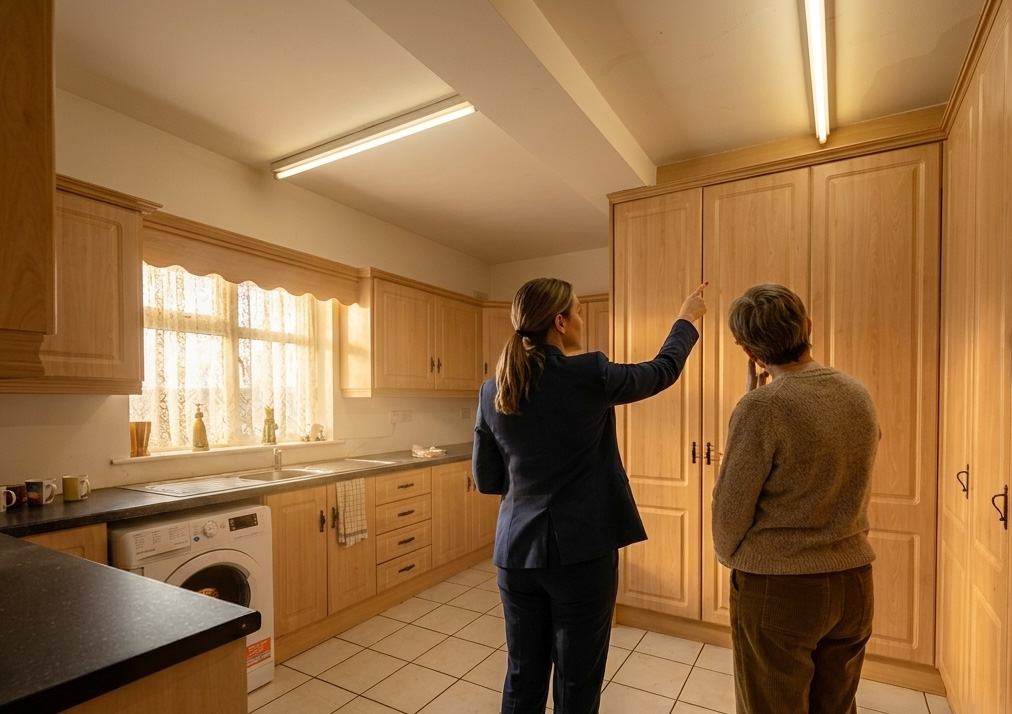
Homeowners focus heavily on kitchen units, islands, and storage — which is fair enough — but forget about how tall cabinets or wall units can block natural light from windows and doors.
A tall bank of units beside a large sliding door can literally cut light in half.
What To Do Instead
- Keep tall units to one side.
- Use lower cabinetry near glazing.
- Choose lighter finishes.
- Plan kitchen layout alongside window placement.
Your kitchen shouldn’t fight the architecture — it should work with it.
5. Not Considering the Middle of the House
Here’s something people don’t always think about.
When you extend the rear of the house, the middle room (often the old dining room) can become a tunnel. Especially in terraced homes in Rathmines or parts of Clontarf.
Suddenly it’s sandwiched between the front living room and the new extension, and it loses direct access to natural light.
Solutions That Work
- Internal glazing panels.
- Removing unnecessary walls.
- Adding rooflights over the middle space.
- Creating wider openings instead of standard doors.
Sometimes the goal isn’t just “more space” — it’s “better space.”
6. Choosing the Wrong Flooring and Finishes
This might sound minor — but it’s not.
Dark floors, dark kitchen units, dark wall colours… and suddenly the bright extension you imagined feels heavy.
We’ve walked into finished projects in Lucan where structurally everything was perfect — but the finishes absorbed light rather than reflecting it.
Keep It Balanced
- Lighter flooring tones.
- Soft wall colours.
- Reflective surfaces in moderation.
- Consistent flooring between old and new spaces.
Consistency helps rooms feel bigger.
7. Forgetting About Visual Sightlines
This one is subtle but powerful.
When you stand at the front door, can you see natural light at the back of the house?
If not, the house can feel smaller than it is.
In many Clontarf homes, we design extensions so that when you enter, your eye is drawn straight through to the garden.
It’s psychological — but it works.
8. Overcomplicating the Design
Sometimes homeowners try to add too many design features at once — split levels, awkward corners, multiple ceiling heights, structural beams in odd places.
Complexity doesn’t automatically mean better.
Clean lines, strong glazing positions, and simple layouts often feel bigger and brighter.
If you’re considering a full reconfiguration alongside your extension, our Home Renovations Dublin page explains how we approach flow across the entire house.
Real Example: A Lucan Kitchen Extension
We worked on a project in Lucan where the initial drawings showed a full-depth extension with minimal roof glazing.
On paper, it looked fine.
But when we reviewed the orientation, we realised most light would be blocked.
We reduced the depth slightly, added two well-positioned rooflights, increased ceiling height by a small amount, and widened the opening to the middle room.
The result? Brighter, airier — and it actually felt bigger despite being slightly smaller on paper.
That’s the difference design decisions make.
Final Thoughts
An extension should feel like it improves your entire home — not just adds square metres.
If you’re planning work in Lucan, Clontarf, Rathmines or anywhere across Dublin, take your time with the design stage. Ask questions. Think about light. Think about flow.
Because once it’s built, it’s built.
If you’d like a second opinion on your plans or just want to talk through ideas before committing, get in touch. We’re always happy to have a practical, no-pressure chat about what will actually work for your home.
Frequently Asked Questions
Does a bigger extension always mean more light?
No. If glazing and orientation aren’t considered properly, a larger extension can actually block light from the existing house.
Are rooflights worth the extra cost?
In most cases, yes. Well-positioned rooflights can dramatically improve natural light levels, especially in north-facing gardens.
Will higher ceilings make a room feel bigger?
Absolutely. Even a modest increase in ceiling height can make an extension feel more spacious and less boxy.
Can I fix poor light levels after the extension is built?
It’s possible but often more expensive. It’s far better to address light flow during the design stage.
Do you help with layout design as well as construction?
Yes. We work with homeowners from early planning through to build, ensuring layout and light are considered from the start.