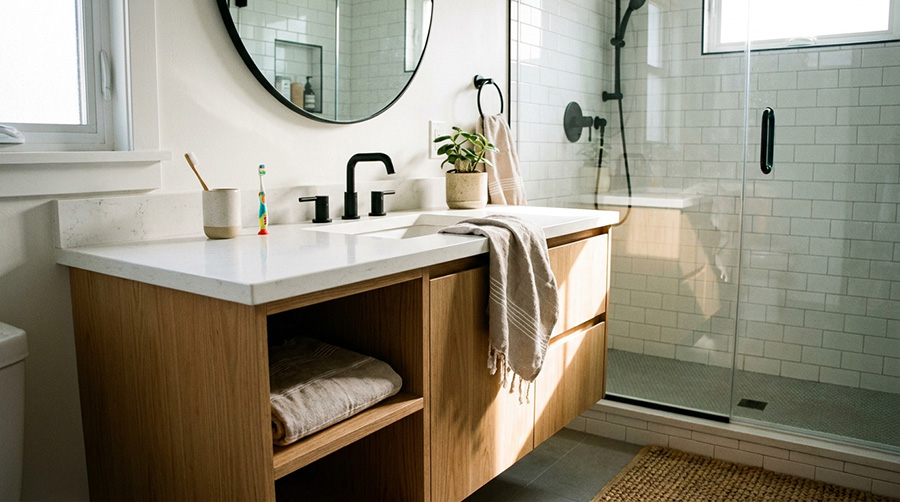


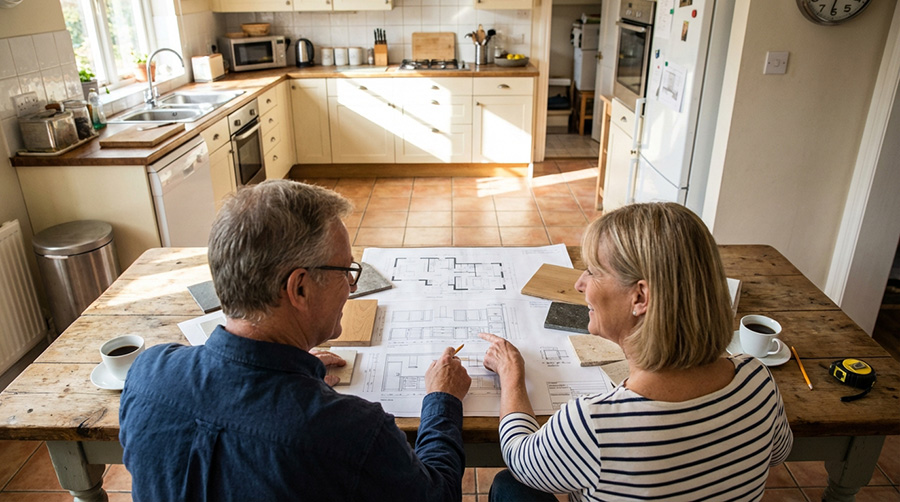
The honest answer is that it depends — on the size of the room, the condition of what’s behind the walls, the materials you choose, and crucially, whether you keep the existing layout. To help you plan properly, we’ve broken down realistic 2026 prices for Dublin, explained where the money actually goes, and shown you where you can save without cutting corners.
The short answer
For a standard, mid-range bathroom renovation in Dublin in 2026, most homeowners spend somewhere between €8,000 and €14,000. That figure assumes a typical family bathroom of three to five square metres, mid-spec fixtures and tiles, and keeping the plumbing roughly where it already is.
If your needs are simpler or grander, the range stretches in both directions:
- Basic refresh (existing layout kept): €3,500 – €6,500
- Standard full renovation (mid-range finish): €8,000 – €14,000
- Wet room or high-spec ensuite: €15,000 – €22,000+
Dublin prices typically run around 15–20% higher than the rest of Ireland. That’s not contractors charging more for the sake of it — it reflects higher labour rates in the city, strong demand for skilled trades, and the practical costs of working in built-up areas, from parking to skip permits to waste access.
Where your money actually goes
A quote of “€11,000” tells you very little on its own. Understanding how that figure breaks down helps you spot a fair price, ask better questions, and decide where it’s worth spending more. Here’s roughly how a standard Dublin bathroom renovation splits up.
Labour (the biggest chunk). Between plumbers, electricians, tilers, and carpenters, labour is usually the largest single cost in any bathroom job. A registered plumber in Dublin charges roughly €65–€95 per hour, and plumbing is typically the biggest trade cost of all. A same-layout job might take a plumber two to four days; the moment you start moving fixtures, that climbs quickly.
Materials and fixtures. This covers everything you can see and touch: the toilet, basin, shower, taps, vanity unit, tiles, and grout. There’s enormous range here. A standard-brand white suite with ceramic tiles and chrome fittings looks clean and professional for a fraction of the cost of designer sanitaryware and natural stone. You don’t need to spend a fortune to get a bathroom that looks genuinely smart.
Waterproofing, prep, and the bits you don’t see. Tanking, levelling floors, repairing old walls or subfloors, and proper waterproofing all happen before the pretty finishes go on. They’re not glamorous, but skimping here is how you end up with problems down the line.
The extras people forget. Skip hire and waste removal, plumbing fittings, and small repairs to old surfaces all add up. We always recommend allowing an extra 10–15% as a contingency, because in older Dublin homes you rarely know exactly what’s behind the tiles until you take them off.
The single biggest cost lever: your layout
If you take one thing away from this guide, make it this. The biggest decision affecting your final bill is whether you move the plumbing.
Keeping your toilet, shower, and basin in their existing positions can save you somewhere between €1,500 and €3,000 on plumbing alone, and it shortens the whole project. Relocating fixtures means rerouting pipework, and moving a toilet is the most expensive of all because of the soil pipe. Expect to add roughly €400–€900 per fixture that gets moved, and considerably more if the main soil stack has to shift.
That doesn’t mean you should never change the layout. Sometimes a poorly arranged bathroom genuinely needs rethinking to work properly, and the result is worth every cent. But it should be a deliberate choice you’ve budgeted for, not a surprise. A good contractor will tell you honestly whether a layout change is necessary or simply nice to have.
What makes one bathroom cost more than another?
Beyond layout, a handful of factors push your number up or down:
- Size. A compact ensuite of around four square metres naturally costs less than a twelve-square-metre family bathroom — fewer tiles, less labour, smaller fixtures.
- The age and condition of your home. Older Dublin houses often hide surprises: tired wiring that needs partial rewiring, dated pipework, or uneven floors. These are common and manageable, but they affect the quote.
- Tiling. Good tilers are booked out months in advance, and quality tiling is something you’ll look at for years. This is not the place to chase the cheapest option.
- Special features. Underfloor heating (roughly €50–€75 per square metre), wet room tanking and drainage, custom cabinetry, and designer fixtures all add cost — and a lot of enjoyment if they’re what you want.
Wet rooms: a special case
Wet rooms have become very popular in Dublin, and for good reason — they look fantastic, they’re easy to clean, and they’re brilliant for accessibility. But they cost more than a standard bathroom for solid technical reasons. A wet room needs specialised tanking, precise drainage gradients, premium waterproof membranes, and expert tiling, because the entire room becomes the shower. Done properly, a complete Dublin wet room starts around €15,000 and rises from there. Done improperly, water finds its way somewhere it shouldn’t — so this is firmly a job for experienced hands.
How to save money without regretting it
Cutting costs is fine; cutting corners isn’t. Here’s where savvy Dublin homeowners genuinely save:
- Keep the existing layout wherever it makes sense. This is the big one.
- Mix budget and premium strategically. Spend on the items you touch every day — taps, shower, the things that get heavy use — and save on areas where a standard option looks just as good.
- Choose mid-range tiles and suites. Light, neutral, standard-brand finishes look timeless and professional without the designer price tag.
- Time it well. Suppliers run seasonal sales, and booking off-peak (often January to March or late autumn) can mean better availability and pricing.
- Never skimp on plumbing or electrics. In Ireland, all electrical and gas work must be carried out by certified, registered professionals. This is both a legal requirement and a safety one — and it protects the investment you’ve just made.
One more piece of advice: be wary of any quote that comes in dramatically below everyone else’s. It usually means something has been left out, and the gap tends to reappear halfway through the job.
Why a proper site visit matters
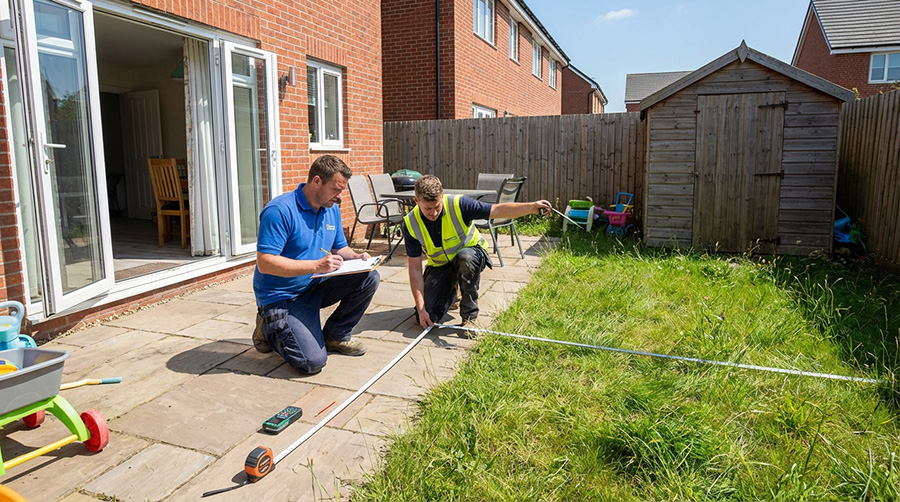
Every figure in this guide is a realistic planning range, not a quote. The only way to get an accurate price for your bathroom is to have an experienced contractor visit, look at the existing plumbing and condition of the room, and understand exactly what you want. Two bathrooms of identical size can carry very different prices once you account for what’s behind the walls and how much the layout is changing.
That’s also where good advice saves you money. An experienced eye can often tell you that a layout change you assumed was necessary actually isn’t — or spot an issue early before it becomes an expensive problem mid-project.
Planning a bathroom renovation in your area?
We carry out bathroom renovations right across Dublin, and we’re always happy to visit, talk through your options, and give you a clear, honest quote with no pressure. You can read more about our bathroom renovation service in your area here:
Whether you’re after a simple refresh, a full family bathroom renovation, or a luxury wet room, the best first step is a conversation. Get in touch and we’ll help you plan a bathroom that fits both your home and your budget.