


If you or someone in your household is living with a disability, your home can sometimes feel like it’s working against you instead of for you. Doorways that are too narrow, bathrooms that feel unsafe, steps that are impossible to manage — these things add stress to daily life that most people never even think about.
The good news is that there is real financial help available. The Housing Adaptation Grant for People with a Disability is designed to help make homes safer, more accessible, and more comfortable — so people can continue living independently in their own homes.
This guide breaks everything down in plain English. No legal jargon. No complicated talk. Just a clear explanation of what the grant is, what it covers, how much funding is available, and how it fits into real renovation projects.
What Is the Housing Adaptation Grant for People with a Disability?
The Housing Adaptation Grant for People with a Disability is a local authority grant that helps cover the cost of adapting a home to meet the needs of a person living with a disability.
The aim is simple: to allow people to live safely and independently in their own home for as long as possible.
This grant can apply whether the person with a disability is:
- The homeowner
- A family member living in the home
- A tenant (with landlord permission)
It’s worth saying early on — this grant isn’t just for extreme situations. Many applications are approved for things people deal with every day, like mobility issues, balance problems, or difficulty using a standard bathroom safely.
How Much Is the Housing Adaptation Grant Worth?
The maximum grant available is currently up to €30,000, but the amount you receive depends on your household income.
This is a means-tested grant, so the local authority looks at the total household income before deciding how much funding you qualify for.
In general terms:
- Lower household income = higher percentage of costs covered
- Higher household income = lower percentage covered
Even if you don’t qualify for the full amount, partial funding can still make a big difference — especially when adaptations are being done as part of a wider renovation.
What Types of Work Does the Grant Cover?
This is one of the most common questions we hear, and the answer is reassuringly broad.
The grant covers works that are considered necessary to make the home suitable for the needs of the person with a disability.
Commonly Approved Works
- Level-access showers and full bathroom adaptations
- Grab rails and safety fittings
- Ramps or improved access to the home
- Widening doorways and corridors
- Stairlifts or through-floor lifts
- Downstairs WC or bedroom conversions
- Improved access to kitchens
It’s not about luxury — it’s about safety, dignity, and independence.
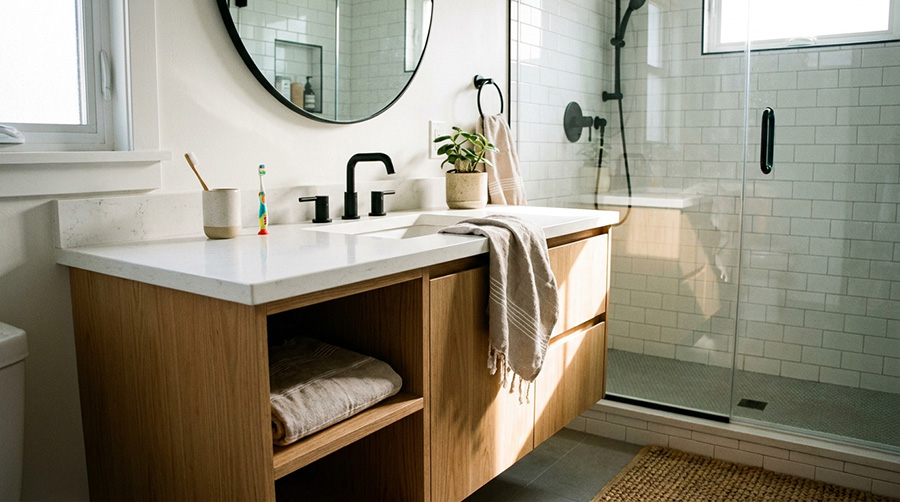
Does the Grant Cover Bathrooms?
Yes — and bathrooms are actually one of the most common adaptations approved.
We regularly see grants used for:
- Removing baths and installing level-access showers
- Non-slip flooring
- Wheelchair-accessible layouts
- Safer toilet positioning
These upgrades are often done alongside general renovation works, especially in older homes where bathrooms weren’t designed with accessibility in mind.
Who Can Apply for the Housing Adaptation Grant?
You may be eligible if:
- A person with a disability is living in the property
- The property is your main residence
- The required works are medically necessary
- You meet the means-testing criteria
Applications usually require medical confirmation from a GP, consultant, or occupational therapist to confirm the need for the adaptations.
How Do You Apply?
Applications are made through your local authority.
Each council has its own application form, but the process is broadly similar across Ireland.
You’ll typically need:
- A completed application form
- Proof of income
- Medical evidence supporting the need for adaptations
- Details or estimates for the proposed works
You can find official information here:
Do You Need Approval Before Starting Work?
Yes — and this is really important.
Do not start work before receiving written approval.
Starting early is one of the most common reasons applications are refused. Even if the work feels urgent, approval must be in place first.
Combining the Grant With Other Renovation Work
This is where planning properly really pays off.
Many homeowners combine disability adaptations with wider renovation projects, such as:
- Full home refurbishments
- Bathroom renovations
- Internal layout changes
- Downstairs extensions or conversions
If you’re already planning renovation work in areas like:
…it often makes sense to plan accessibility upgrades at the same time, rather than treating them as a separate project later.
How Long Does the Process Take?
Timelines vary depending on the local authority and demand, but typically:
- Applications can take several weeks to assess
- Additional information may be requested
- Approved works must be completed within a set timeframe
It’s not a fast process, but it’s absolutely worth doing properly.
Common Mistakes to Avoid
- Starting work before approval
- Incomplete medical documentation
- Not factoring the grant into early design stages
- Assuming something won’t be approved without checking
Frequently Asked Questions
How much is the Housing Adaptation Grant for People with a Disability?
The Housing Adaptation Grant for People with a Disability can provide funding of up to €30,000. The exact amount depends on household income and eligibility, as the grant is means tested by the local authority.
Is the Housing Adaptation Grant for People with a Disability means tested?
Yes. This grant is means tested, which means the local authority will assess your household income to determine what level of funding you qualify for.
What types of home adaptations does the grant cover?
The grant can cover necessary works to make a home suitable for a person with a disability. This commonly includes level-access showers, bathroom adaptations, ramps, widened doorways, stairlifts, lifts, and downstairs WC or bedroom conversions.
Who can apply for the Housing Adaptation Grant for People with a Disability?
You may be able to apply if a person with a disability lives in the property, the home is their main residence, the adaptations are medically necessary, and the household meets the local authority’s eligibility and means-testing criteria.
Can tenants apply for the Housing Adaptation Grant?
Yes. Tenants can apply for the Housing Adaptation Grant, but written permission from the landlord is usually required as part of the application process.
Do I need medical proof to apply?
Yes. Medical evidence confirming the need for the adaptations is required. This is typically provided by a GP, consultant, or occupational therapist.
Do I need approval before starting the adaptation work?
Yes. You must receive written approval from the local authority before starting any work. Starting adaptations before approval is granted can result in the application being refused.
How do I apply for the Housing Adaptation Grant for People with a Disability?
Applications are made through your local authority. You will usually need a completed application form, proof of income, medical evidence, and details or estimates for the proposed works.
How long does it take to get a decision on the grant?
Timeframes vary depending on the local authority and demand, but applications often take several weeks to assess. In some cases, additional information may be requested during the review process.
Can I combine this grant with other renovation work?
Yes. Many homeowners combine disability adaptations with wider renovation works such as bathroom upgrades or full refurbishments, provided all grant conditions are met and approval is received before work begins.
Final Thoughts
Living with a disability shouldn’t mean living in a home that feels unsafe or unsuitable. The Housing Adaptation Grant exists to help people stay where they belong — in their own homes, with comfort and dignity.
If adaptations are needed, it’s always worth exploring what support is available and planning early. Done right, these changes can make everyday life noticeably easier.