


If you’re thinking about renovating your kitchen in Dublin, the first question is usually the same:
How much is this actually going to cost me?
And it’s a fair question, because a kitchen renovation can mean very different things depending on the house, the layout, the finish you want and how much work needs to happen behind the scenes.
For one homeowner, a kitchen renovation might mean replacing old units, fitting a new worktop and upgrading the appliances. For another, it might mean knocking through a wall, moving plumbing, changing electrics, fitting underfloor heating, adding new flooring and creating a completely new open-plan kitchen-dining space.
So while there is no one-size-fits-all answer, we can give you a realistic guide.
As a rough guide, a kitchen renovation in Dublin in 2026 can cost anywhere from €10,000 to €50,000+, depending on the size of the kitchen, the quality of the materials and the amount of building work involved.
A smaller, more straightforward kitchen update may sit closer to the lower end. A full renovation in a typical Dublin semi-detached home, with new units, worktops, appliances, electrics, plumbing, tiling and labour, will often fall into the €20,000 to €35,000 range. A high-end kitchen with premium finishes, bespoke cabinetry, structural changes or an open-plan layout can easily go beyond €40,000 to €50,000+.
In this guide, we’ll break down where the money goes, what you get at each budget level, and what tends to push the cost up.
Why Kitchen Renovation Costs Vary So Much
The reason kitchen prices vary so much is because the kitchen is one of the most complicated rooms in the house.
It’s not just a room with cabinets.
It involves carpentry, plumbing, electrics, appliances, ventilation, tiling, flooring, lighting, plastering and often some level of building work. If the layout is changing, there may also be drainage, steelwork, wall removal or structural alterations to consider.
That’s why two kitchens that look similar on Pinterest can have completely different costs in real life.
The biggest cost factors usually include:
- The size of the kitchen
- Whether the layout is staying the same
- The quality of the kitchen units
- The type of worktop
- The appliances chosen
- Electrical and plumbing changes
- Flooring and tiling
- Lighting
- Structural work
- Labour and project management
- The age and condition of the house
In Dublin, costs can also be affected by access, parking, older housing stock, tight spaces, waste removal and the general cost of skilled trades.
Budget Kitchen Renovation: €10,000 to €18,000
A budget kitchen renovation is usually best suited to homeowners who want to improve the kitchen without making major changes to the layout.
At this level, you’re normally keeping the plumbing and electrics mostly where they are. The sink stays in the same position. The cooker or hob stays roughly where it is. You’re not knocking walls, moving doors or completely redesigning the space.
This type of project may include:
- New standard kitchen units
- Laminate or entry-level worktops
- Basic splashback or tiling
- Standard sink and tap
- Some new appliances
- Minor electrical updates
- Basic flooring
- Painting and finishing
- Labour for removal and installation
A budget kitchen renovation can make a big difference if the existing kitchen is tired, dated or poorly finished, but the overall layout still works.
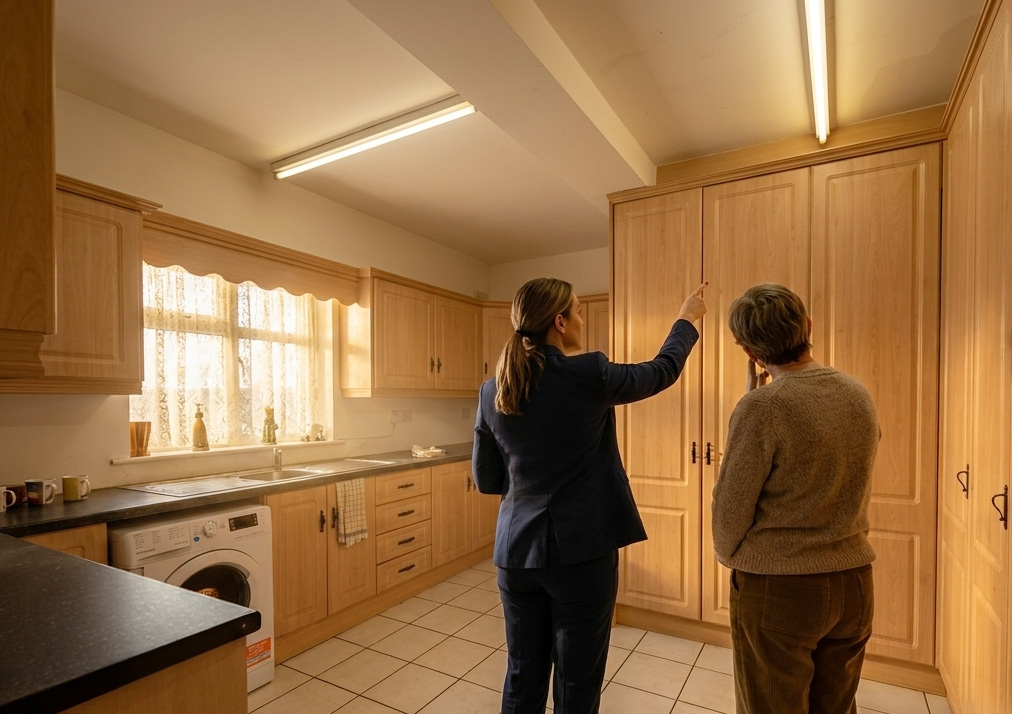
For example, if you have a standard kitchen in a Dublin terraced house or semi-D and you’re replacing old cabinets with new units, keeping the same layout and choosing sensible finishes, you may be able to keep the project within this range.
However, it’s important to be realistic. Once you add new appliances, extra sockets, flooring, tiling and plumbing adjustments, the cost can rise quickly.
At this tier, you are generally not getting luxury finishes or major changes. You’re getting a cleaner, fresher and more functional kitchen without completely rebuilding the space.
Mid-Range Kitchen Renovation: €20,000 to €35,000
This is where many Dublin kitchen renovations tend to land.
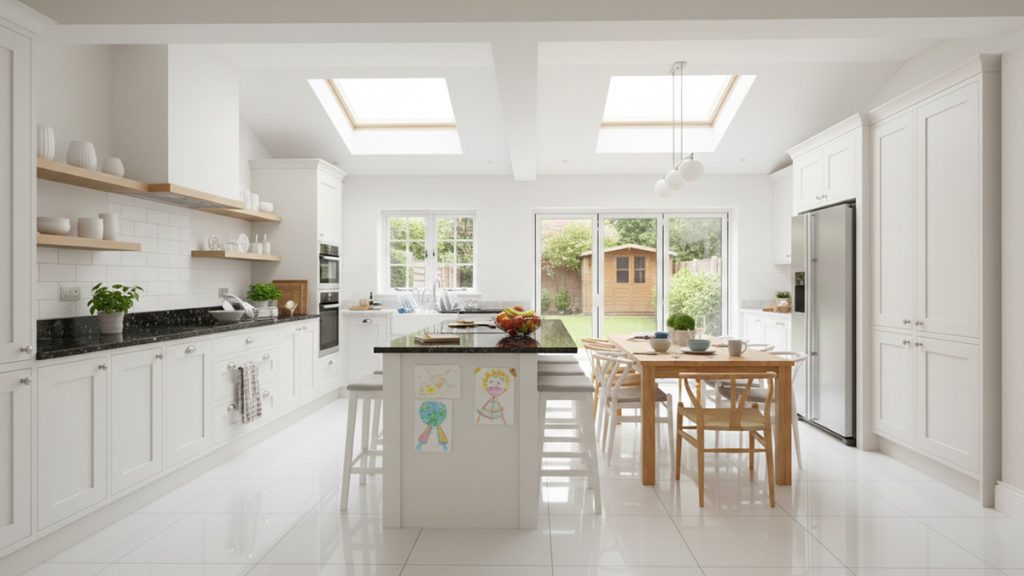
A mid-range kitchen renovation gives you more flexibility with design, materials and finish. It is suitable for homeowners who want a proper upgrade and are planning to stay in the house for the medium to long term.
This type of project may include:
- Better quality fitted kitchen units
- Quartz or solid surface worktops
- Integrated or mid-range appliances
- New sink and tap
- Updated plumbing
- Additional sockets and lighting
- New flooring
- Tiling or splashback
- Plastering and painting
- Improved storage
- Possible breakfast bar or small island
- Project coordination across multiple trades
For a typical Dublin semi-detached home, a mid-range renovation might involve removing the old kitchen, updating the electrics, fitting new units, installing quartz worktops, replacing flooring and adding better lighting.
This is the level where you start to get a kitchen that feels designed rather than simply replaced.
You might add pull-out storage, deep drawers, pantry-style units, integrated bins, better task lighting and improved flow between cooking, dining and family areas.
The layout may still stay broadly the same, but there may be some changes to improve usability. For example, you might move the fridge, change the position of the oven, create a better food prep area or add a small seating zone.
For many homeowners, this is the sweet spot. You get a kitchen that looks great, works properly and adds real value to the home, without going into fully bespoke or luxury territory.
High-End Kitchen Renovation: €40,000 to €70,000+
A high-end kitchen renovation is a more involved project.
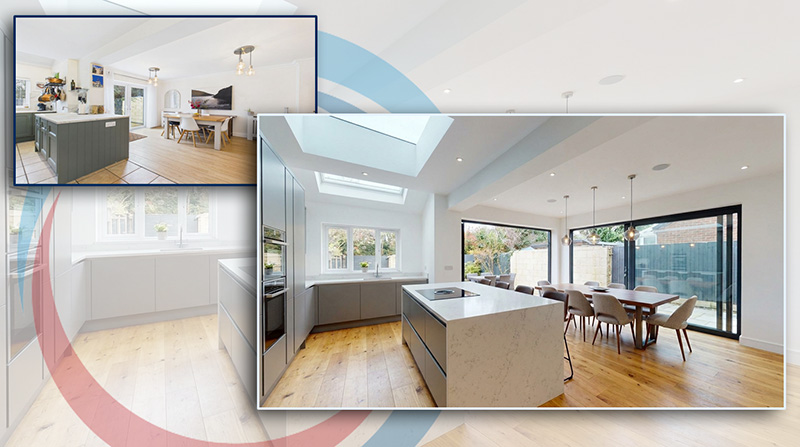
This may be part of a larger home renovation, extension or open-plan redesign. It often includes premium materials, more detailed design work and a higher level of finish.
This type of project may include:
- Bespoke or premium kitchen cabinetry
- Large kitchen island
- Quartz, granite, porcelain or premium stone worktops
- High-end appliances
- Feature lighting
- Underfloor heating
- Large-format floor tiles
- Custom storage
- Structural alterations
- Wall removal
- New glazing or doors
- Full plumbing and electrical redesign
- Premium finishes throughout
This is where the kitchen becomes more than just a functional room. It becomes the centre of the home.
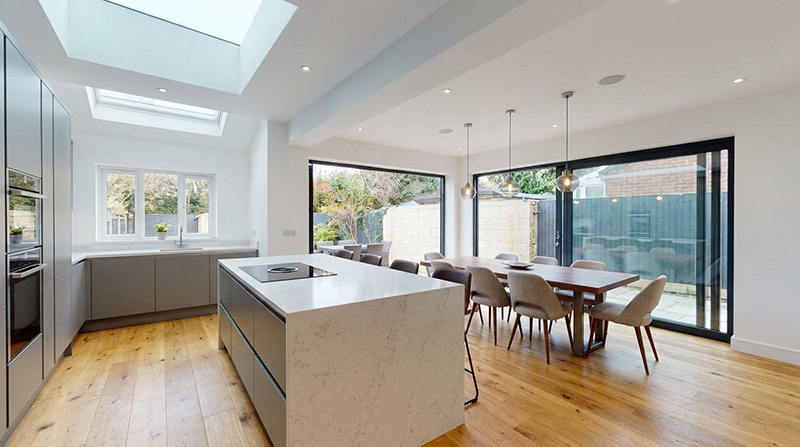
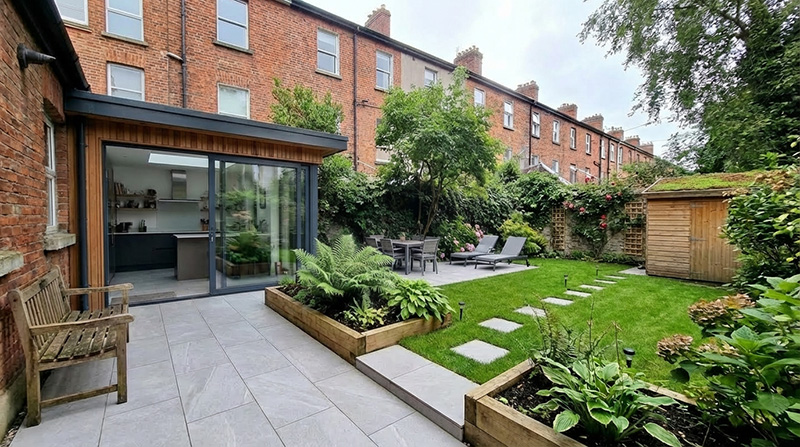
For many Dublin homeowners, this type of kitchen is part of a bigger vision: a rear extension, an open-plan kitchen-dining-living area, or a full renovation of an older house.
The cost rises because you’re no longer just replacing what’s there. You may be changing how the home works.
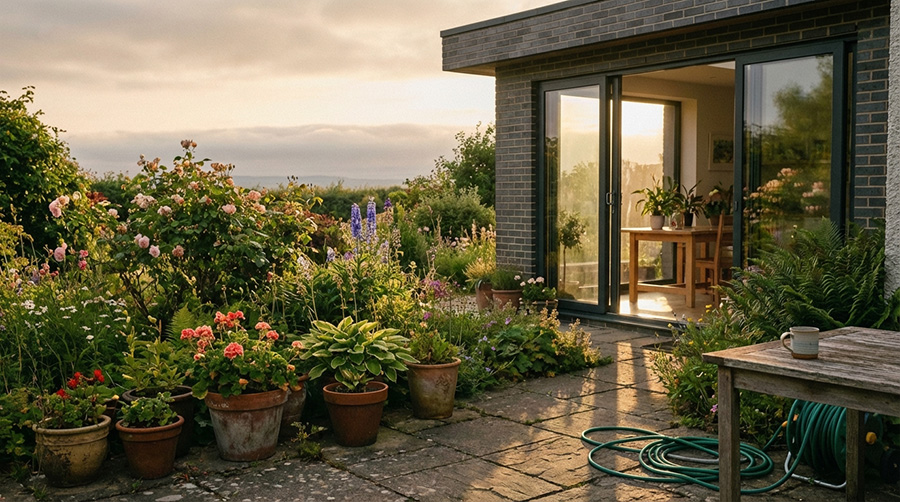
If you’re removing a wall, adding steel, installing large sliding or bifold doors, moving plumbing, changing floor levels or redesigning the back of the house, then the kitchen cost becomes part of a wider building project.
At this level, it’s very easy for the kitchen element alone to exceed €50,000, especially when premium appliances, worktops and bespoke joinery are involved.
Where the Money Goes in a Kitchen Renovation
A kitchen renovation budget is made up of several parts. Understanding these will help you see why quotes can vary so much.
Kitchen Units
Kitchen units are usually one of the biggest costs.
The price depends on the number of units, the finish, the internal storage options and whether the kitchen is flat-pack, standard fitted, made-to-measure or bespoke.
Basic units will keep the budget lower. Bespoke cabinetry, painted finishes, custom storage and premium door styles will increase the cost.
Storage also makes a difference. Pull-out larders, corner solutions, deep drawers and integrated bins are very useful, but they do add to the price.
Worktops
Worktops can change both the look and the cost of a kitchen.
Laminate is usually the most affordable option and can work well in a budget renovation. Solid wood can look warm and natural but needs maintenance. Quartz is very popular because it is durable, attractive and available in a wide range of finishes. Granite, porcelain and premium stone surfaces can push the budget higher again.
For a typical Dublin kitchen, worktops can range from a modest cost for laminate to several thousand euro for quartz or stone, especially if there is a large island.
Appliances
Appliances are another big variable.
Some homeowners are happy with reliable mid-range appliances. Others want premium ovens, induction hobs, integrated fridge-freezers, wine coolers, boiling water taps or smart appliances.
A basic appliance package may cost a few thousand euro. A high-end package can cost several times that.
If you’re trying to control the budget, appliances are one area where choices matter. You can still get a lovely kitchen without choosing the most expensive brand in the showroom.
Plumbing
If your sink, dishwasher and washing machine are staying in the same location, plumbing costs may be fairly manageable.
If you’re moving the sink to an island, relocating drainage, changing the water supply or redesigning the layout, costs increase.
This is especially true in older Dublin homes, where existing plumbing may need upgrading once work begins.
Electrics
Modern kitchens need plenty of electrical planning.
You may need sockets for appliances, countertop use, island power, lighting, extractor fans, ovens, hobs and smart devices.
Older homes may also need electrical upgrades before the new kitchen can be safely installed.
Electrical costs increase when you add recessed lighting, pendant lights, under-cabinet lighting, extra circuits or new appliance positions.
Tiling and Splashbacks
Tiling can be a relatively small part of the budget or a more expensive design feature, depending on what you choose.
Simple splashback tiling is usually manageable. Full-height tiling, feature tiles, large-format porcelain or specialist finishes will cost more.
Some homeowners now choose quartz or stone splashbacks to match the worktop. This looks very smart but is more expensive than standard tiles.
Flooring
Flooring is often forgotten at the start, but it can be a meaningful part of the budget.
Options include laminate, engineered wood, tiles, luxury vinyl tile and porcelain.
The condition of the subfloor also matters. If the floor needs levelling or preparation, that adds cost.
In open-plan kitchen extensions, flooring can become a much bigger item because the same floor may continue into the dining and living space.
Labour
Labour is a major part of any kitchen renovation.
You may need a builder, kitchen fitter, carpenter, electrician, plumber, tiler, plasterer, painter and possibly a structural engineer if walls are being removed.
A good renovation is not just about buying nice materials. It’s about coordinating the work properly so that each trade comes in at the right time and the finish is clean.
This is where project management makes a real difference.
Sample Cost for a Typical Dublin Semi-D Kitchen
Let’s take a realistic example.
Imagine a typical semi-detached house in Dublin with an older kitchen that needs a full upgrade. The homeowner wants a good quality kitchen, quartz worktops, new flooring, new appliances, updated electrics and plumbing kept mostly in the same place.
A rough sample budget might look like this:
- Kitchen units: €8,000–€14,000
- Worktops: €3,000–€6,000
- Appliances: €3,000–€7,000
- Plumbing and electrics: €3,000–€6,000
- Flooring and tiling: €2,500–€6,000
- Plastering, painting and finishing: €1,500–€4,000
- Labour and fitting: €5,000–€10,000
That gives a rough total of €26,000 to €53,000, depending on the choices made.
A very controlled version of this project may come in lower. A more premium version, or one involving layout changes, can go higher.
This is why it’s always better to price the project based on the actual house, not just a general figure from online.
What Pushes a Kitchen Renovation Budget Up?
Several decisions can quickly increase the cost of a kitchen renovation.
Moving Plumbing
Moving the sink, dishwasher or washing machine can add cost because water supply and drainage need to be changed.
This is especially true if the new position is far from the existing services.
Moving Walls or Making Structural Changes
Removing a wall between a kitchen and dining room can completely transform a home, but it may require structural assessment, steelwork, plastering, flooring repairs and electrical changes.
This can be worth doing, but it needs to be budgeted properly.
Premium Worktops
Quartz, granite, porcelain and other premium surfaces can add a lot to the final cost, especially if you have a large island or matching splashback.
They look fantastic, but they are not a small line item.
High-End Appliances
Premium appliances can quickly push the budget up.
A standard oven and hob package is one thing. Multiple ovens, warming drawers, wine fridges, downdraft extractors and high-end integrated appliances are another.
Custom Cabinetry
Bespoke joinery gives you a beautiful finish and makes the best use of awkward spaces, but it costs more than standard units.
This is often worth considering in older Dublin homes where walls, floors and corners are not always perfectly square.
Lighting Design
Good lighting can completely change a kitchen.
However, feature pendants, recessed ceiling lights, under-cabinet lighting, LED strips and smart controls all add to the electrical cost.
Flooring Through a Larger Space
If your new kitchen connects into a dining or living area, you may want the same flooring throughout. That gives a much better finish, but it also increases the quantity of materials and labour.
Older House Surprises
Older Dublin homes often come with surprises.
Once the old kitchen is removed, you may find outdated wiring, poor plumbing, uneven floors, damp issues or damaged plaster.
This is why a contingency is important.
How Much Contingency Should You Allow?
For a kitchen renovation, it is sensible to allow a contingency of around 10% to 15%.
For older homes or projects involving structural changes, you may want to allow more.
This does not mean the project will definitely go over budget. It simply means you are not caught off guard if something unexpected appears once work begins.
A kitchen renovation is much less stressful when the budget includes a little breathing room.
What Do You Get at Each Budget Level?
At €10,000 to €18,000, you can expect a cleaner, fresher kitchen with standard units, basic worktops and minimal layout changes. This is a practical upgrade.
At €20,000 to €35,000, you can expect a more complete renovation with better materials, improved storage, updated electrics, new flooring and a stronger overall finish. This is a good level for many family homes.
At €40,000+, you can expect a more premium kitchen, often with bespoke details, higher-end materials, more design input and possibly structural or layout changes. This is where the kitchen becomes a major feature of the home.
Should You Renovate the Kitchen on Its Own or as Part of a Bigger Project?
This depends on your long-term plans for the house.
If the current layout works and you simply want a better kitchen, a standalone renovation may be enough.
But if you are also thinking about a rear extension, open-plan living, new flooring throughout or a full downstairs renovation, it may be better to plan everything together.
The reason is simple: doing the work in the wrong order can cost more.
For example, you don’t want to install a new kitchen and then decide six months later to knock through a wall, change the floor level or extend the back of the house.
If there’s any chance of a larger renovation, it’s worth discussing the bigger picture before committing to the kitchen design.
How Long Does a Kitchen Renovation Take?
A straightforward kitchen replacement may take a few weeks once all materials are ready.
A fuller renovation involving electrics, plumbing, plastering, flooring and multiple trades may take 4 to 8 weeks on site, depending on the scope.
If structural work, wall removal or a wider renovation is involved, the timeline may be longer.
The planning stage also matters. Kitchen units, worktops and appliances can have lead times, so decisions need to be made early.
The smoother projects are usually the ones where the layout, materials and finishes are agreed before work starts.
How to Keep Your Kitchen Renovation Budget Under Control
The best way to control the budget is to make clear decisions early.
Before work begins, try to agree:
- The layout
- The kitchen supplier or cabinet style
- Worktop choice
- Appliances
- Flooring
- Lighting
- Sink and tap
- Tile or splashback finish
- Paint colours
- Any structural changes
Changing your mind halfway through is sometimes unavoidable, but it can affect cost and timeline.
It also helps to separate “must-haves” from “nice-to-haves”.
For example, your must-haves might be better storage, a larger fridge, more worktop space and improved lighting. Your nice-to-haves might be a boiling water tap, premium handles or a wine fridge.
That way, if the budget needs to be adjusted, you know where to make sensible decisions.
Do You Need Planning Permission for a Kitchen Renovation?
For a standard internal kitchen renovation, you usually do not need planning permission.
However, if the kitchen renovation is part of an extension, major structural alteration or significant change to the outside of the house, planning may need to be considered.
Some rear extensions can fall under exempted development, but this depends on the size, height, location and details of the work.
If you are planning a kitchen extension or open-plan redesign, it is always worth getting proper advice before starting.
Is a Kitchen Renovation Worth It?
For many Dublin homeowners, yes.
The kitchen is one of the most used rooms in the house. A well-designed kitchen can improve daily life, make the home easier to use and create a better space for cooking, family time and entertaining.
It can also support the value of the property, especially when the renovation is done properly and suits the style of the home.
The key is not just to spend money. It’s to spend it in the right places.
A practical layout, good storage, durable surfaces, proper lighting and quality workmanship will usually matter more than chasing every trend.
Planning a Kitchen Renovation in Dublin?
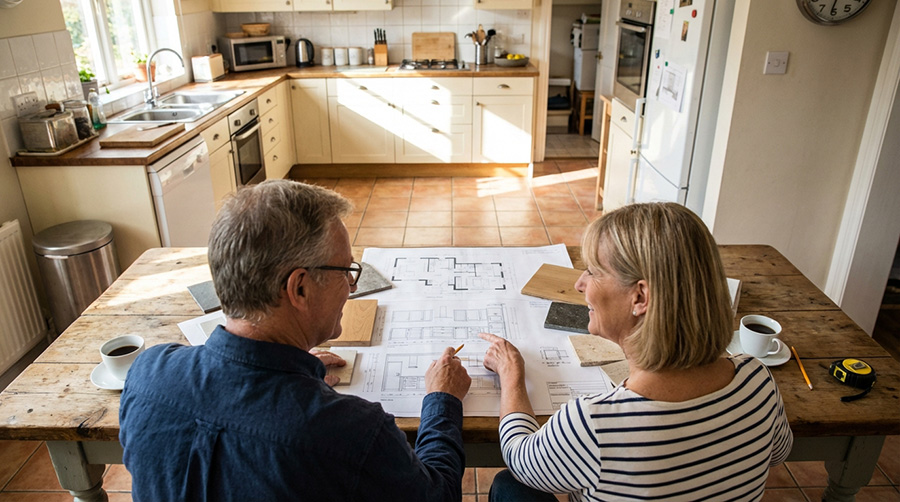
If you’re thinking about renovating your kitchen, the best place to start is with a proper conversation about the house, the layout and what you want the space to do.
Some kitchens need a simple upgrade. Others need a complete redesign. And sometimes the best kitchen renovation is part of a bigger plan for the ground floor of the home.
At Home Renovations Dublin, we help homeowners plan and manage kitchen renovations, extensions and full home refurbishments across Dublin and the surrounding areas.
Whether you’re updating an older kitchen, creating a more practical family space or planning a larger open-plan renovation, we can help you understand what’s involved and what kind of budget you should allow.
Get in touch today to talk through your kitchen renovation plans and arrange a consultation.
FAQs
How much does a kitchen renovation cost in Dublin in 2026?
As a rough guide, a kitchen renovation in Dublin can cost from around €10,000 for a basic upgrade to €50,000+ for a high-end or more complex project. Many standard kitchen renovations fall somewhere between €20,000 and €35,000, depending on size, materials and the amount of work involved.
What is the biggest cost in a kitchen renovation?
The biggest costs are usually kitchen units, worktops, appliances and labour. Costs can also rise if plumbing, electrics, flooring or structural changes are needed.
Is it cheaper to keep the same kitchen layout?
Yes, keeping the same layout usually helps control the budget. Moving sinks, appliances, walls or drainage can add extra plumbing, electrical and building costs.
How long does a kitchen renovation take?
A straightforward kitchen replacement may take a few weeks once materials are ready. A more complete renovation involving plumbing, electrics, flooring and plastering may take 4 to 8 weeks or longer, depending on the scope.
Do I need planning permission to renovate my kitchen?
For a standard internal kitchen renovation, planning permission is usually not needed. If the kitchen renovation is part of an extension or involves major external changes, planning rules may apply.
What should I budget for a kitchen in a typical Dublin semi-D?
For a good quality kitchen renovation in a typical Dublin semi-detached home, a realistic budget may be around €25,000 to €40,000, depending on finishes, appliances, layout changes and the condition of the existing space.
Should I renovate my kitchen before doing an extension?
If you are considering an extension in the future, it is usually better to plan both together. Installing a new kitchen first and changing the layout later can lead to extra cost and disruption.