


If you’re thinking about extending your home in Dublin, there’s a good chance you’ve had this exact thought:
“How much of the garden can I actually take without ruining the space?”
It’s one of the biggest decisions you’ll make during any extension project. And honestly, it’s not just about space — it’s about light, lifestyle, resale value, and how your home actually feels to live in.
I’ve seen people go too far and regret it… and others who held back and wished they’d built bigger. So in this post, I’ll walk you through how to get the balance right — especially for typical Dublin homes.
Why Garden Space Still Matters (Even If You Want More Room Inside)
It’s easy to get caught up in wanting more space indoors — bigger kitchen, open-plan living, maybe a utility or a home office.
But your garden isn’t just “leftover space”. It’s actually a big part of what makes your home enjoyable.
Here’s what you’re really giving up when you extend too far:
- Natural light coming into your home
- Outdoor space for kids, pets, or relaxing
- Privacy and breathing room
- Future resale appeal
In places like Lucan, Clontarf, and Rathmines, I’ve seen buyers walk away from beautiful homes simply because the garden felt too tight or overshadowed.
So yes — extending is great. But not at any cost.
The “Rule of Thumb” for Garden Space in Dublin
There’s no exact formula, but a good general guide we use is this:
Try to keep at least 50% of your original garden space.
Now, that doesn’t mean measuring it down to the inch — but it’s a helpful mindset.
For example:
- If you’ve got a 20-metre garden, aim to keep at least 10 metres
- If your garden is already small (common in Dublin), be even more cautious
That said, this rule flexes depending on your layout and priorities.
Typical Garden Sizes in Dublin Homes
Let’s put it into context with what we usually see:
- Terraced homes: 10–15 metres
- Semi-detached homes: 12–20 metres
- Detached homes: 20 metres+
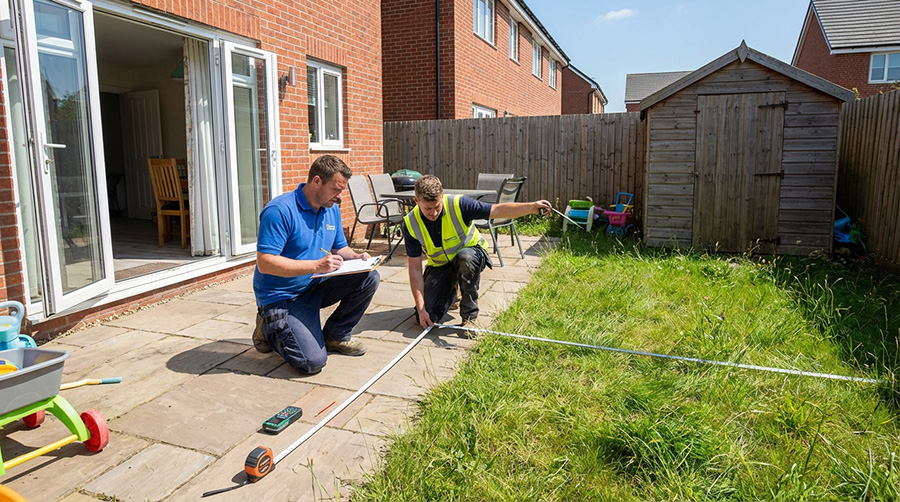
If you take 6–8 metres for an extension on a standard semi-detached house, you’re already making a big impact on the garden.
And once it’s gone… it’s gone.
What Happens If You Extend Too Far?
This is where people can get caught out.
On paper, a bigger extension sounds brilliant. But in reality, going too far can create a few issues:
1. You Lose Natural Light
A deeper extension can block light from reaching the back of your house — especially in Dublin where we’re not exactly blessed with sunshine.
2. The Garden Becomes “Unusable”
A narrow strip of grass isn’t really a garden. It becomes more of a leftover space than somewhere you’d actually spend time.
3. Planning Issues
Depending on the size, you may run into planning permission problems — particularly if you exceed exempted development limits.
4. It Can Affect Resale Value
This one surprises people. A massive extension with no garden isn’t always more valuable. Buyers still want outdoor space.
How to Find the Right Balance
This is where experience really comes in. It’s not just about measurements — it’s about how the space will feel.
Here are a few things we always look at:
Orientation (Sunlight Direction)
If your garden gets good sunlight (south or west facing), it’s worth protecting more of it.
Cutting into a sunny garden too much is something people often regret.
Width vs Depth
Sometimes a wider extension (across the back) works better than a deeper one. You gain space without sacrificing as much garden length.
Ceiling Heights & Glazing
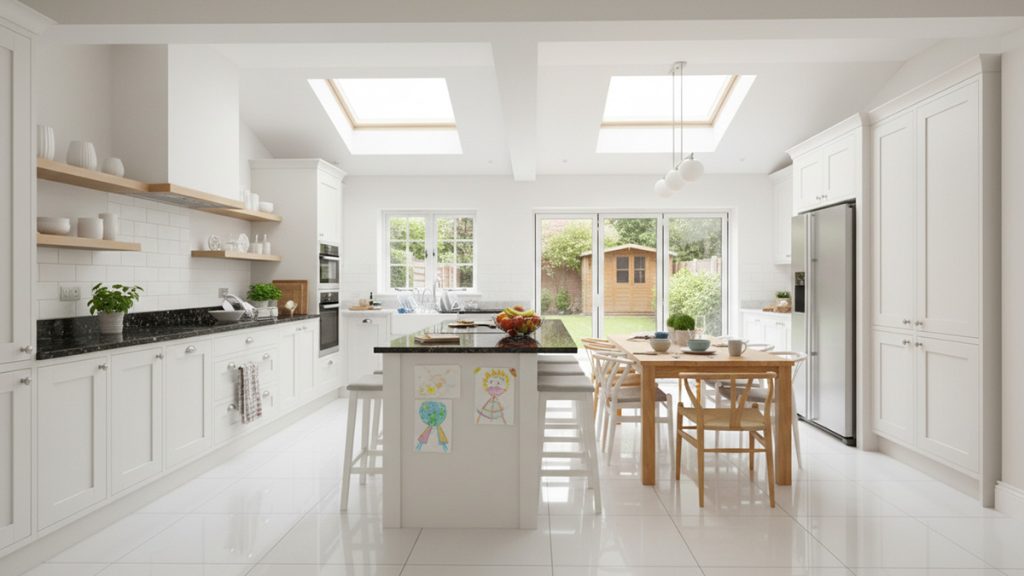
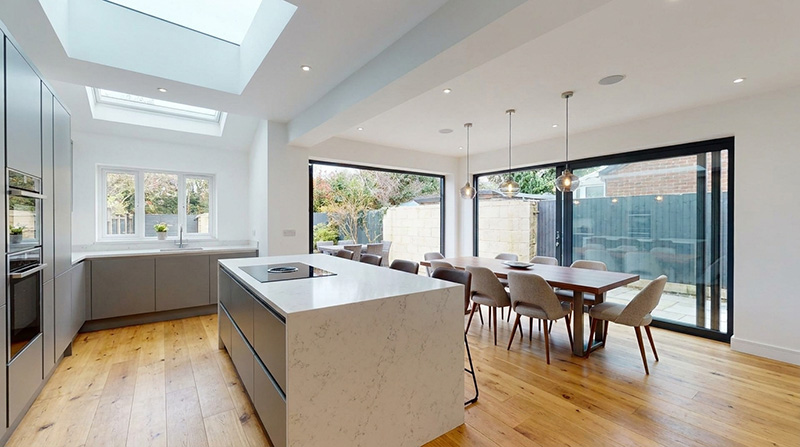
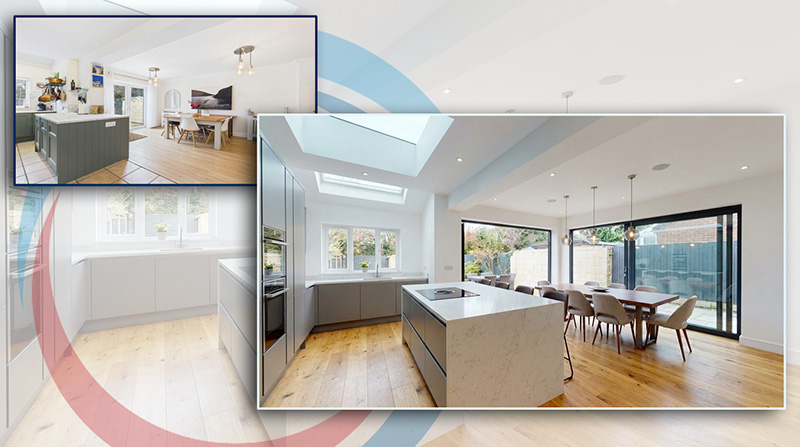
You can make a slightly smaller extension feel bigger with:
- Roof lights
- Sliding or bi-fold doors
- Higher ceilings
It’s not always about going further out — sometimes it’s about designing smarter.
Future Use
Think ahead a bit:
- Do you have young kids who’ll use the garden?
- Do you like entertaining outdoors?
- Would a patio or pergola be part of your plans?
All of this plays into how much space you should keep.
Popular Extension Sizes That Work Well
From what we see across Dublin, these tend to hit the sweet spot:
- 3–4 metre extension: Great for open-plan kitchen/dining without losing too much garden
- 5–6 metre extension: Larger space but needs careful planning
- Over 6 metres: Usually only works well with larger gardens
Most homeowners are surprised how much you can achieve with 3–4 metres when it’s designed properly.
Planning Permission Considerations in Ireland
In many cases, you can build a rear extension without planning permission under exempted development rules.
But there are limits, including:
- Maximum size (typically 40m² total including previous extensions)
- Height restrictions
- Distance from boundaries
Once you go beyond these, you’ll need planning permission — and garden size can become a factor in whether it’s approved.
If you’re unsure, it’s always worth getting advice early before committing to a design.
Real Example (Typical Dublin Semi-Detached)
Let’s say you’ve got:
- 15-metre garden
- Standard semi-detached home
A 4-metre extension leaves you with 11 metres — still a really usable garden.
A 7-metre extension leaves you with 8 metres — which starts to feel tight, depending on layout.
That’s the kind of trade-off you need to visualise before making a decision.
Can You “Make Up” for Lost Garden Space?
Yes — to a degree.
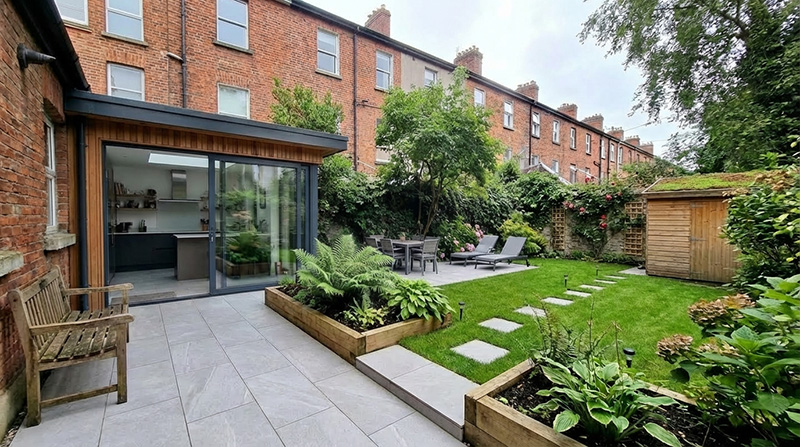
If you do take more garden space, you can still create a really nice outdoor area by:
- Designing a proper patio or seating area
- Adding raised beds or landscaping
- Using lighting to make the space feel bigger
- Installing sliding doors to connect indoors and outdoors
But it’s important to be honest — design can improve a space, but it can’t fully replace lost space.
Internal Links You Might Find Helpful
If you’re still exploring your options, these pages will give you a better idea of what’s possible:
Final Thoughts (Keeping It Real)
If I’m being completely honest, most people’s regret isn’t that they didn’t build big enough… it’s that they didn’t think enough about the garden.
Your extension should improve your whole home — not just add square footage.
So take your time, think about how you actually live, and try to strike that balance between indoor space and outdoor breathing room.
And if you’re not sure, it’s always worth getting proper advice before you build — it can save you a lot of stress (and money) later on.
Be sure to check out our Grant posts to see what is available to you:
A Homeowner’s Guide to Building & Energy Grants in Ireland
New Window & Door Grants for Irish Homeowners
Housing Renovation Grants for Older People in Ireland
FAQs
How much garden space should I leave after an extension?
A good rule of thumb is to keep at least 50% of your original garden space, but this can vary depending on your property and lifestyle.
Will a bigger extension reduce my home’s value?
Not always, but if it leaves little or no usable garden, it can make your property less attractive to buyers.
Do I need planning permission for a rear extension in Dublin?
Many extensions fall under exempted development, but there are strict size and height limits. Larger extensions will require planning permission.
What is the ideal extension size for a semi-detached house?
Typically 3–4 metres works well, giving you extra space without sacrificing too much garden.
Can I design my garden to feel bigger after extending?
Yes — good landscaping, lighting, and layout can make a big difference, but it won’t fully replace lost space.